

Share
by Zachary Kimball on July 7, 2026
Hardware-as-a-service (HaaS) is gaining momentum across a variety of industries. Many of the early adopters of HaaS are in robotics, offering robots-as-a-service (RaaS) to decrease barriers to entry and improve overall value to customers. Others offer machine-as-a-service (MaaS), device-as-a-service (DaaS), or equipment-as-a-service (EaaS).
Some companies pitch outcomes more than assets, offering data-as-a-service or platform-as-a-service models. From network-as-a-service to facades cleaning; managed service providers (MSPs) to managed security service providers (MSSPs); and autonomous construction equipment to diagnostic sensors and 3D printers, these companies are on the cutting-edge of their fields.
This post is part of a series about modern hardware companies, their business models, and the future of HaaS. For more, see posts from early and late March, early and late April, early and late May, and early June.
Beewise
- Founded: 2018
- Location: San Ramon, California
- Employees: ~150
- What they do: AI- and robotics-powered autonomous beehives for commercial pollination and beekeeping
- Key customers: Nuveen Natural Capital, Agriland, Olam Food Ingredients, Sweet Bee Honey Co., Browning’s Honey
- Website: beewise.ag
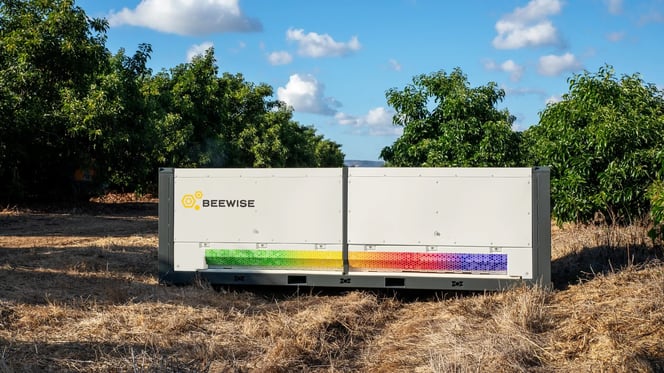
Beewise’s core product is BeeHome, an autonomous, AI-enabled robotic hive designed to reduce colony loss and deliver higher-quality pollination. The latest units house up to ten colonies in a solar-powered structure equipped with computer vision that tracks bees, brood frames, and hive conditions 24/7—down to individual cells. Robotics handle automated feeding, frame equalization, and chemical-free heat treatments against Varroa mites, while onboard sensors measure temperature, humidity, pesticide exposure, and other environmental factors. BeeHome integrates seamlessly with existing beekeeping workflows (standard wooden frames, forklift handling) and provides remote operation and real-time hive analytics through the Beewise app. The system is built to strengthen colonies, increase flight hours, and improve pollination efficiency across large acreages.
Beewise does not sell BeeHome hardware. Instead, the company delivers pollination and hive-management as a service, supplying growers with guaranteed, high-quality hives at market-rate pricing while overseeing all logistics, deployment, remote monitoring, and in-field support. Beekeepers are paid at the start of the pollination season and gain automated visibility into their colonies, with Beewise responsible for day-to-day BeeHome operation and maintenance. The same service structure underpins the company’s corporate sustainability offering (“Bees for Buildings”), where customers subscribe to on-site BeeHome installations supported by ESG and biodiversity dashboards. The model functions as full HaaS: BeeHome is the hardware backbone of a recurring, service-driven commercial relationship—not a capital equipment sale.
“Soon after we launched our AI-powered Robot (BeeHome), we realized that we would be best positioned to help save bees at scale by providing ‘pollination-as-a-service’ to growers and farmers, rather than selling our technology to beekeepers,” says Saar Safra, CEO. “Today, we work with more than 250 growers, including some of the world's largest agribusinesses, and we save more than 200M bees a year.”
Samsara
- Founded: 2015
- Location: San Francisco, California
- Employees: ~3,500
- What they do: Connected operations platform combining IoT hardware and cloud software for fleet management, safety, compliance, and asset monitoring
- Key customers: DHL, Sysco, The Home Depot, Estes, Sunrun
- Website: samsara.com
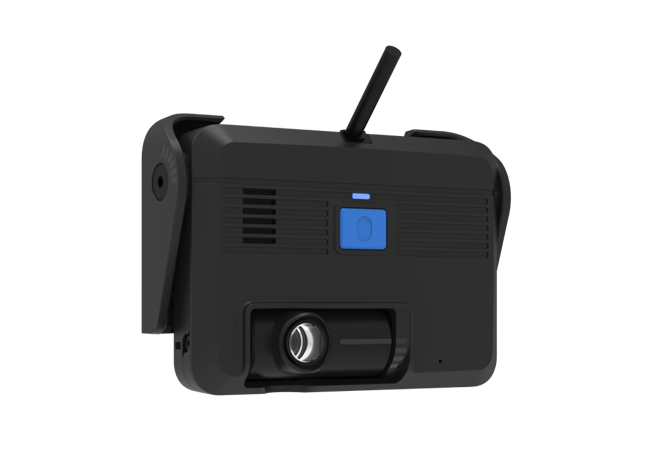
Samsara provides an integrated hardware-and-software platform that gives organizations real-time visibility into vehicles, equipment, and day-to-day physical operations. Its offering includes in-vehicle gateways, AI-powered dash cameras, asset trackers, and environmental and equipment sensors that collect data continuously from fleets and job sites. That data flows into Samsara’s cloud platform, where teams can see what’s happening on the ground—tracking location, utilization, driver behavior, safety events, compliance status, and asset health in one place. The platform supports multiple applications, from fleet telematics to AI-driven safety and equipment monitoring, allowing customers to layer new capabilities onto a shared hardware and data foundation as their operations grow.
The company operates a subscription-led business model centered on recurring software licenses tied to deployed devices. Customers typically enter multi-year contracts priced per vehicle, asset, or device, with licenses required for hardware to function within the platform. Hardware is sold or bundled alongside these licenses, but the primary economic driver is ongoing software revenue rather than one-time equipment sales. Licenses include access to Samsara’s cloud software, firmware updates, support, and (for cellular devices) connectivity, creating predictable recurring revenue as fleets expand, add devices, or adopt additional applications. While hardware is essential to the system, Samsara uses it to anchor a scalable, software-first subscription model.
FLO
- Founded: 2009
- Location: Quebec City, Canada
- Employees: ~220
- What they do: EV charging hardware + network software + nationwide operations
- Customers: Cities, utilities, fleets, commercial real estate, retail, hospitality, and homeowners
- Website: flo.com
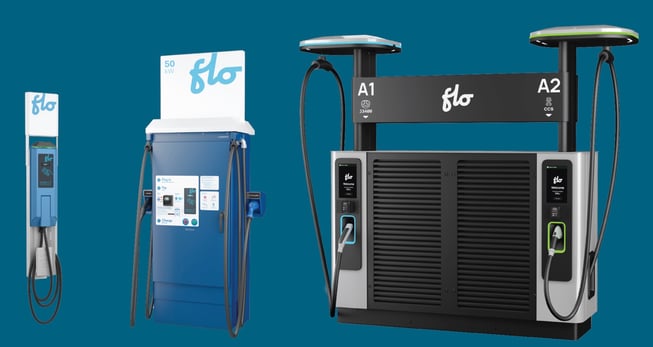
FLO designs and manufactures its own EV charging hardware and pairs it with a full suite of network and management software for commercial, fleet, municipal, and multi-unit residential deployments. The portfolio includes commercial Level 2 chargers such as the CoRe+, ruggedized for high-utilization public environments, and the FLO Ultra, a 320 kW fast charger built for highway corridors and urban fast-charging sites. FLO also produces the FLO Home series for residential use. Networked stations integrate with FLO’s cloud platform and driver app for session initiation, payment processing, uptime management, and user support. The company also operates its own public charging network of more than 95,000 stations across North America, giving businesses and cities access to a large, field-proven EVSE ecosystem.
For commercial and public deployments, FLO uses a CapEx hardware + recurring subscription model. Site hosts purchase the charging stations and then subscribe to FLO’s Global Management Services (GMS), a connectivity and management layer that provides cellular or network connectivity, remote monitoring and fault detection, access to station management tools, and automated revenue distribution. FLO also offers optional operation and maintenance services and, in some cases, runs stations directly for customers under “sell-and-operate” agreements. Separately, the company owns and operates part of the network itself (“own-and-operate”), earning revenue from charging sessions. Residential FLO Home units are sold as CapEx hardware and do not require a subscription to function.
Attune
- Founded: 2013
- Location: Vienna, Virginia
- Employees: ~25
- What they do: Real-time monitoring platform for indoor air quality (IAQ), energy, water, environmental conditions, and asset health
- Key customers: Siemens, Boston Properties, Carr Properties, LinkedIn, TRC
- Website: attuneiot.com
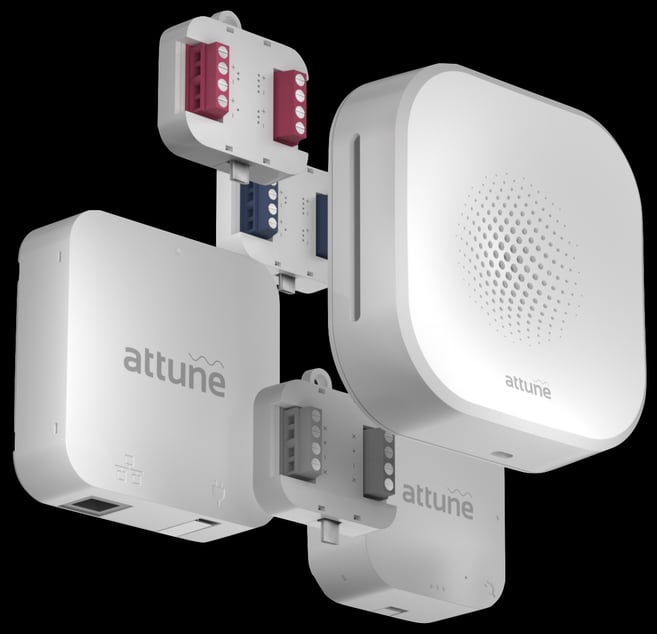
Attune (formerly Senseware) delivers a hardware-and-cloud platform that gives buildings real-time visibility into air quality, energy use, water systems, and equipment health. Its system combines Attune-built devices—a central gateway, wireless nodes, and snap-in sensor modules—that plug into new or existing equipment without complex setup. Dedicated air-quality devices track particles, gases, and odors; energy and water tools support wireless submetering, leak and freeze detection, and flow monitoring; and asset-monitoring kits provide live insights into HVAC systems, walk-in coolers, and other critical equipment. All data streams into Attune’s cloud dashboard, where customers can see conditions as they change, receive alerts, automate controls, and manage multiple buildings from one place—even in facilities without a modern building-automation system.
The company operates a hardware-enabled subscription model. Customers use Attune-built devices as part of each deployment, with hardware provided as part of the overall solution rather than sold as standalone equipment. The core of the business model is a recurring, usage-based software subscription priced by the number of data streams a customer monitors. This subscription covers real-time data ingestion, dashboards, analytics, alerts, reporting, remote device configuration, and integrations. Attune also provides system design, onboarding support, and ongoing monitoring assistance, allowing customers to expand their deployments over time by adding additional sensors or bridges as their data needs grow.
Ember LifeSciences
- Founded: 2022
- Location: Westlake Village, California
- Employees: ~30
- What they do: Temperature-controlled cold chain solutions for transporting pharmaceuticals, biologics, vaccines, and lab specimens
- Key customers: CVS Health, Chartwell, USADA
- Website: emberlifesciences.com
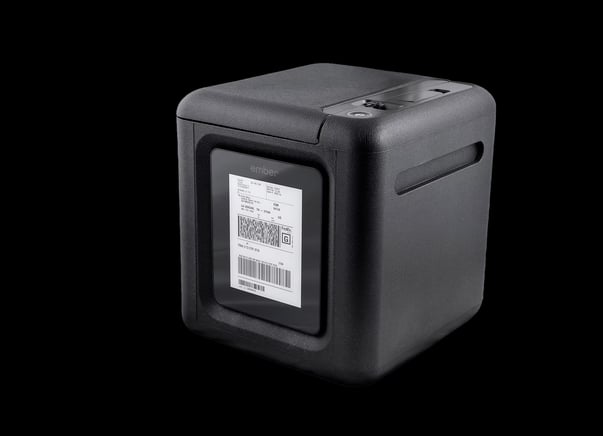
Ember LifeSciences develops self-refrigerated shipping systems designed to protect temperature-sensitive medicines and specimens throughout transport. The company’s flagship product, the Ember Cube, is a cloud-connected shipping box that integrates active or passive thermal control, GPS location tracking, real-time temperature monitoring, and chain-of-custody visibility. Data from each shipment flows into a cloud-based dashboard used by shippers and recipients to monitor conditions in transit, confirm compliance, and reduce the risk of spoilage, loss, or temperature excursions. Together, the hardware and software replace traditional cold-chain packaging and standalone temperature loggers while supporting high-volume deployments across healthcare networks.
The company operates a service-based model built around managed cold-chain assets. Rather than selling packaging or devices outright, Ember retains control of the Ember Cube fleet and provides customers with access to intelligent shipping assets supported by continuous cloud connectivity and monitoring. This approach allows Ember to deliver reliability, visibility, and compliance over time, while helping customers reduce waste and total cost of ownership as shipments scale across locations and use cases.