

Share
by Zachary Kimball on June 9, 2026
Hardware-as-a-service (HaaS) is gaining momentum across a variety of industries. Many of the early adopters of HaaS are in robotics, offering robots-as-a-service (RaaS) to decrease barriers to entry and improve overall value to customers. Others offer machine-as-a-service (MaaS), device-as-a-service (DaaS), or equipment-as-a-service (EaaS).
Some companies pitch outcomes more than assets, offering data-as-a-service or platform-as-a-service models. From network-as-a-service to facades cleaning; managed service providers (MSPs) to managed security service providers (MSSPs); and autonomous construction equipment to diagnostic sensors and 3D printers, these companies are on the cutting-edge of their fields.
This post is part of a series about modern hardware companies, their business models, and the future of HaaS. For more, see posts from early and late February, early and late March, early and late April, and early May.
Able Innovations
- Founded date: 2010
- Location: Toronto, Ontario
- Employees: ~30
- What they do: Robotic patient transfer systems for healthcare facilities
- Key customers: Bruyère Health
- Website: ableinnovations.com
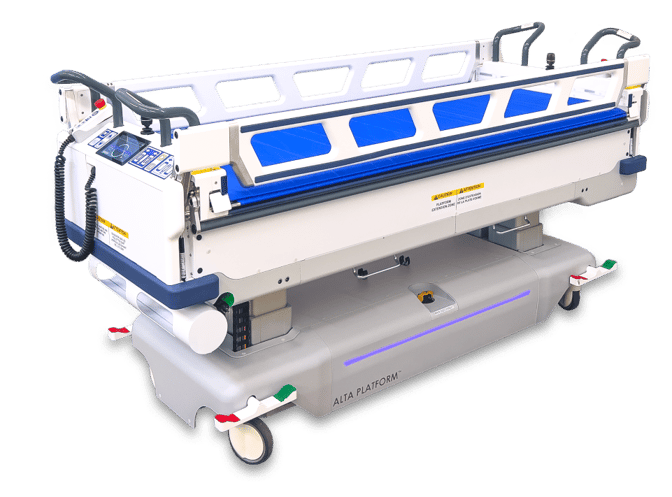
Able Innovations builds robotic systems that automate patient transfers, reducing the physical strain on caregivers and improving safety for both staff and patients. Its flagship product, the ALTA Platform, enables single-person lateral transfers—moving patients between beds, stretchers, or imaging equipment—without manual lifting or repositioning. The system uses motorized rollers, advanced sensors, and adaptive controls to perform transfers smoothly and securely, even with immobile or bariatric patients. Designed to integrate into standard clinical environments, ALTA also collects usage data and provides operational insights via a connected dashboard.
Healthcare providers can purchase or lease the ALTA Platform and subscribe to ongoing services that include maintenance, training, software updates, and access to real-time utilization analytics. This flexible approach lowers the upfront cost of adoption while ensuring facilities benefit from continuous product improvement and performance monitoring. The model supports a shift toward more efficient, data-informed patient handling practices in both acute and long-term care settings.
“We designed ALTA to integrate seamlessly into existing workflows while providing the flexibility healthcare providers need,” says co-founder and CEO Jayiesh Singh. “Our hybrid model allows institutions to adopt cutting-edge technology without the burden of significant upfront costs, ensuring that both patients and caregivers benefit from improved safety and efficiency.”
Eaton
- Founded: 1911
- Location: Cleveland, Ohio (global HQ in Dublin, Ireland)
- Employees: ~53,000
- What they do: Intelligent power management systems and digital infrastructure solutions
- Customers: Rolls-Royce, Lockheed Martin, Embraer, NASA, Valero Energy Corporation
- Website: eaton.com
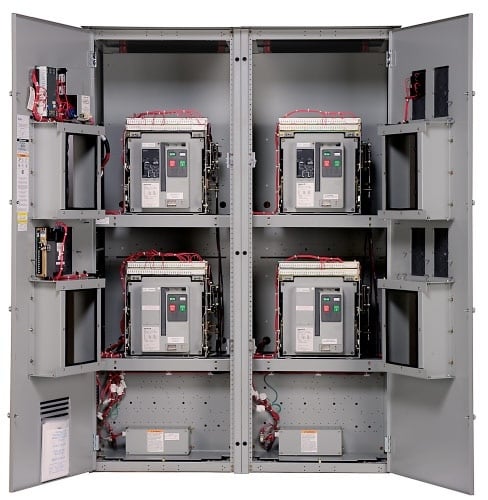
Eaton develops intelligent power management systems that span the entire energy lifecycle, from electrical grids and backup systems to EV charging networks and data centers. Its hardware portfolio includes circuit breakers, power distribution units, UPS systems, and grid automation technologies, while its aerospace and e-mobility divisions design high-efficiency hydraulic, fuel, and drivetrain systems. Increasingly, Eaton’s physical products are integrated with its software suite, Brightlayer, which offers digital twins, predictive analytics, and real-time monitoring for electrical, mechanical, and industrial infrastructure. The company’s partnerships with NVIDIA and Autodesk extend these capabilities to AI-optimized energy management, digital design simulation, and predictive maintenance across sectors like manufacturing and construction.
Eaton’s business model is hybrid, combining traditional capital equipment sales with a growing portfolio of software subscriptions, service contracts, and cloud-connected monitoring solutions. Customers purchase hardware outright, then layer on digital services such as Power Xpert Quality (PXQ) for edge analytics, Brightlayer Digital Energy Twin for energy optimization, and subscription-based performance monitoring for uptime assurance. These offerings generate recurring revenue and expand the value of Eaton’s installed base by enabling customers to optimize power usage, anticipate failures, and reduce operational risk.
Kelvin
- Founded date: 2011
- Location: Brooklyn, New York
- Employees: ~60
- What they do: Smart radiator enclosures, hybrid electrification systems, and software for building-level efficiency and control
- Customers: Multi-family and legacy residential buildings (e.g., Brooklyn Navy Yard co‑ops), property managers, real estate partners
- Website: kel.vin
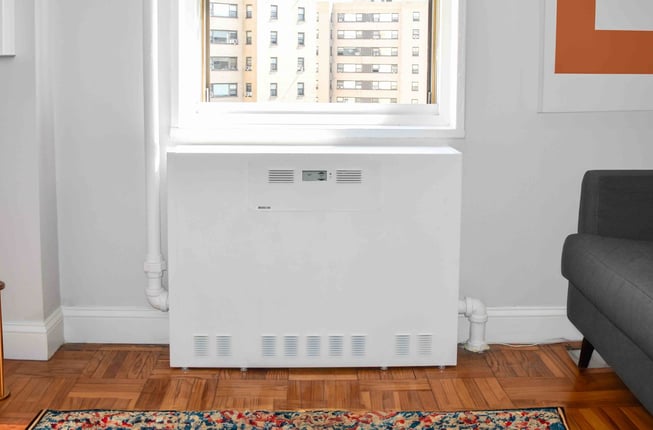
Kelvin helps decarbonize older buildings by combining retrofit-friendly hardware with cloud-based automation. Its flagship product, the Cozy, is a thermostatic cover that transforms steam radiators into zone-controlled systems, reducing overheating and energy waste in buildings that typically lack central HVAC. The company has since expanded into hybrid electrification, integrating heat pumps and thermal batteries to shift buildings toward electric heating and cooling with minimal infrastructure upgrades. All systems are tied into Kelvin’s software layer, which offers remote monitoring, analytics, and building-wide control.
Kelvin operates under a flexible hybrid sales model. Property owners can either purchase Cozy covers outright (around $750 each, plus install fees) or enroll in a no-upfront subscription model, paying a monthly per-unit fee (typically $10–15) that covers hardware, installation, and software services. Larger hybrid electrification projects are often financed through energy-as-a-service contracts. Kelvin also works with partners like ClearGen, which has pledged up to $100M to help fund these deployments. This model enables deep energy savings and emissions reductions without requiring building owners to front the capital.
Standard Bots
- Founded: 2016
- Location: Glen Cove, New York
- Employees: ~90
- What they do: Six-axis robot arms with built-in AI and no-code programming
- Key customers: Verizon, Amazon, Lockheed Martin, NASA, Purdue University
- Website: standardbots.com
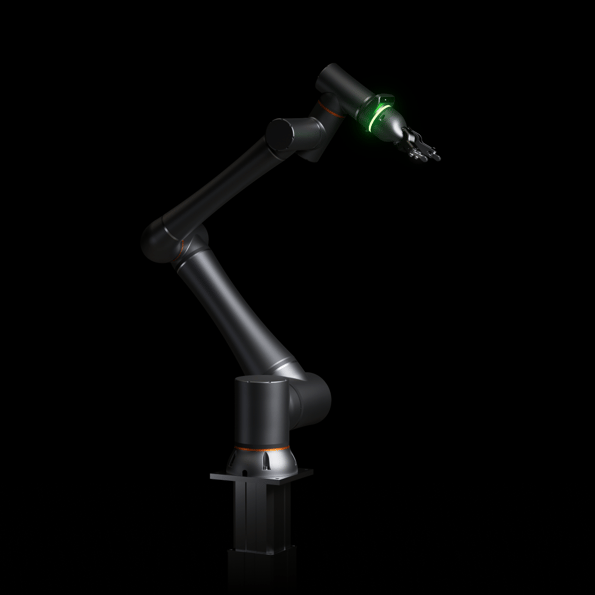
Standard Bots builds and supports an AI-powered robot arm called the RO1. These six-axis cobots deliver industrial performance (a payload of 18 kg, 1.3 m reach, ±0.025 mm repeatability, and speeds up to nearly 3 m/s) and include embedded vision and NVIDIA GPU-based AI running on Arc OS. Users teach tasks visually, often via demonstration, with no coding required. Routines are displayed in a side-by-side layout that makes editing intuitive for operators, while robust APIs and SDKs support deeper customization for developers. RO1 units are mobile-base ready and integrated into a unified fleet management platform with remote troubleshooting and continuous software updates.
The company offers flexible ownership under a hybrid Hardware-as-a-Service (HaaS) model. The RO1 lists for approximately $37K or can be leased for around $5/hour; both models include the hardware, software, remote diagnostics, virtual training, warranty coverage, and all updates. Leasing terms bundle the robot and AI platform under a single subscription, with clearly defined provisions for renewal, upgrades, and support. This structure helps teams avoid large upfront costs while benefiting from an evolving autonomy stack.
Capra Robotics
- Founded: 2019
- Location: Viby J, Denmark
- Employees: ~50
- What they do: Modular outdoor mobile robots for logistics, inspection, and urban maintenance
- Key customers: Lockheed Martin, Robert Bosch, ZF Friedrichshafen, Deutsche Telekom
- Website: capra.ooo
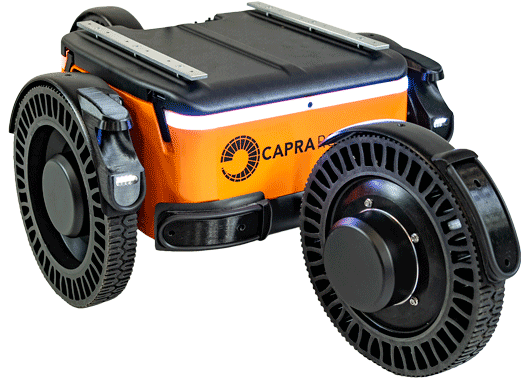
Capra Robotics develops autonomous mobile robot platforms built to operate reliably across both indoor and outdoor environments. Each robot combines a durable, all-terrain chassis with modular payloads and an onboard AI stack for perception, mapping, and autonomous navigation. The system supports LiDAR, cameras, GNSS, and third-party software integration, enabling customers to repurpose the same base platform for different tasks simply by swapping modules or updating software. In practice, Capra’s robots are used for outdoor inspection, inter-building logistics, and urban maintenance: patrolling facilities, transporting materials between sites, or removing litter and debris in public spaces. This universal approach brings industrial-grade precision to unpredictable outdoor settings and positions Capra as a flexible bridge between factory automation and real-world mobility.
Capra’s business model blends Hardware-as-a-Service (HaaS) with traditional sales. Under its HaaS offering, customers access Capra robots through subscription agreements that bundle hardware, software, maintenance, and updates into a single recurring fee, shifting costs from CapEx to OpEx while allowing long-term flexibility without owning the equipment. For customers who prefer ownership, Capra offers a hybrid HaaS model, in which the hardware is purchased outright but paired with ongoing subscriptions for software, analytics, and fleet management support. This dual approach lets enterprises choose the financial and operational model that best fits their needs, while providing Capra with recurring revenue from its software and service ecosystem.