

Share
by Zachary Kimball on September 29, 2026
Hardware-as-a-service (HaaS) is gaining momentum across a variety of industries. Many of the early adopters of HaaS are in robotics, offering robots-as-a-service (RaaS) to decrease barriers to entry and improve overall value to customers. Others offer machine-as-a-service (MaaS), device-as-a-service (DaaS), or equipment-as-a-service (EaaS).
Some companies pitch outcomes more than assets, offering data-as-a-service or platform-as-a-service models. From network-as-a-service to facades cleaning; managed service providers (MSPs) to managed security service providers (MSSPs); and autonomous construction equipment to diagnostic sensors and 3D printers, these companies are on the cutting-edge of their fields.
This post is part of a series about modern hardware companies, their business models, and the future of HaaS. For more, see posts from early and late June, early and late July, early and late August, and early September.
Flo Mobility
- Founded: 2020
- Location: Bengaluru, India
- Employees: ~35
- What they do: Autonomous material-handling robots for construction sites
- Key customers: L&T, Godrej, Embassy, Sobha, Capacite, Nissan
- Website: flomobility.com
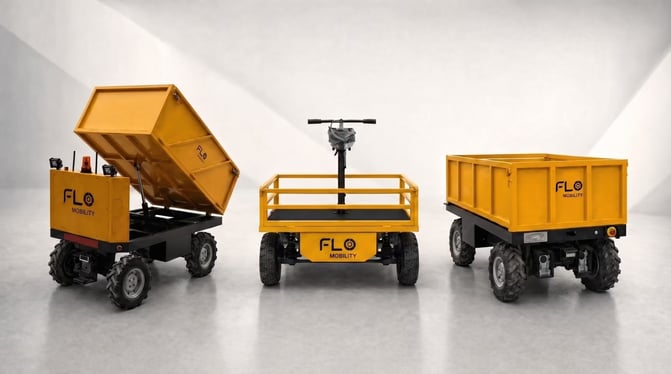
Flo Mobility's robots haul material across construction sites, moving cement, tile, rebar, and debris from a site's storage zone out to the crews using it and between the floors of a building still under construction. The fleet consists of the Autonomous Cart, the 1-Ton Hauler, and the Semi-Autonomous Cart. Each is a battery-electric four-wheel-drive unit on a dust-sealed chassis, with a hydraulic tipper that empties the bed and swappable battery packs so one robot can work back-to-back shifts. Load capacity spans 500 to 1000 kilograms, top speed is 5 kilometers per hour, the machines climb a 12 degree grade, and a charge runs 12 hours. A 32-beam LiDAR scanner gives 360 degree obstacle detection, cameras handle path following, GPS fixes position, and on-board edge computing lets the robot react without waiting on a network. Flo Fleet Control is the other half of the system: a cloud console that assigns tasks, plans missions, streams live telemetry and sensor feeds, maps the site in three dimensions, and hands an operator direct remote control of any robot in the fleet.
Flo Mobility keeps the machines and places them with builders for the length of a project in a robots-as-a-service offering. A customer pays one recurring all-in fee covering the robot, deployment, remote operation and support, maintenance, and Fleet Control access, with the customer's own operations team assigning tasks and taking direct control through the console. The subscription scales with the length of the project rather than its cost. Buying outright is available, though roughly four in five customers take the subscription instead. Resellers can sign their own subscriptions inside an assigned territory and earn recurring commission on them. Margin accrues across the working life of each machine rather than at a single sale, and over-the-air updates keep sharpening units already at work.
"The RaaS model allows us to offer a flexible, low-capex solution, rather than sell a piece of hardware outright and expect customers to fully monitor and maintain it themselves," says Manesh Jain, Founder and CEO at Flo Mobility. "And as our AI algorithms are continually enhanced, customers' operations are further streamlined and refined across the board. This enables us to provide an end-to-end solution that seamlessly integrates with customers' systems and delivers business value, as opposed to a one-off piece of equipment."
FLIR
- Founded: 1978 (FLIR Systems; now part of Teledyne Technologies)
- Location: Wilsonville, Oregon
- Employees: ~1,900
- What they do: Thermal imaging, sensing, and perception systems for industrial, public safety, defense, and research markets
- Key customers: Nurjana Technologies, City of Arlington, Dovecote Park, Trafsys
- Website: flir.com
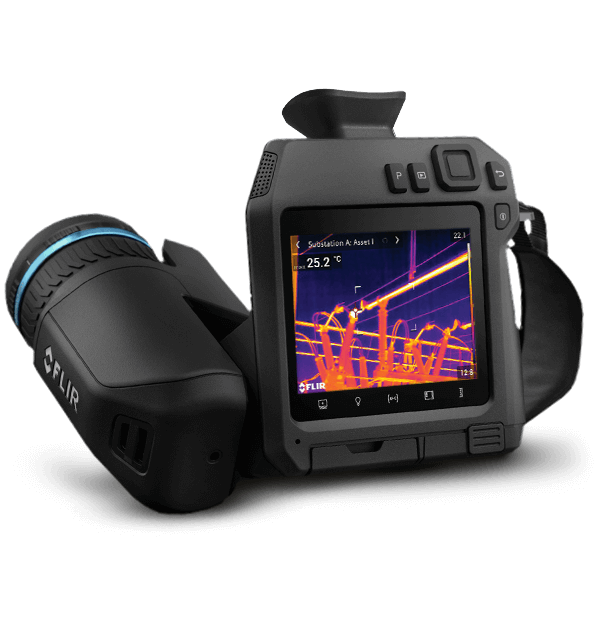
Teledyne FLIR designs and manufactures thermal imaging, visible-light imaging, and sensing systems that help organizations detect, measure, and understand conditions that are invisible to the naked eye. Its hardware portfolio spans handheld and fixed thermal cameras, optical gas imaging systems, acoustic and machine-vision cameras, and integrated sensing platforms used in condition monitoring, asset inspection, security, traffic management, and defense applications. These systems increasingly connect into software layers such as FLIR Assetlink and Thermal Studio, which organize inspection workflows, tie images to asset hierarchies, and support analysis, reporting, and collaboration across teams.
FLIR operates a hybrid recurring model anchored in upfront hardware sales paired with ongoing software and service revenue. Customers typically purchase imaging equipment as capital assets, then layer on subscription software for image analysis, reporting, and inspection management, alongside maintenance, calibration, training, and support services over the device lifecycle. Software offerings such as Thermal Studio Suite and Research Studio are sold on annual or multi-year subscriptions, while Assetlink extends FLIR’s role into continuous asset monitoring and operational workflows. This model allows FLIR to monetize a long-lived installed base while continuously improving the value of deployed hardware through software updates, applications, and data connectivity.
BioIntelliSense
- Founded: 2018
- Location: Golden, Colorado
- Employees: ~80
- What they do: Continuous medical-grade patient monitoring wearables
- Customers: hospital systems, post-acute care networks, and home-based remote patient monitoring programs
- Website: biointellisense.com
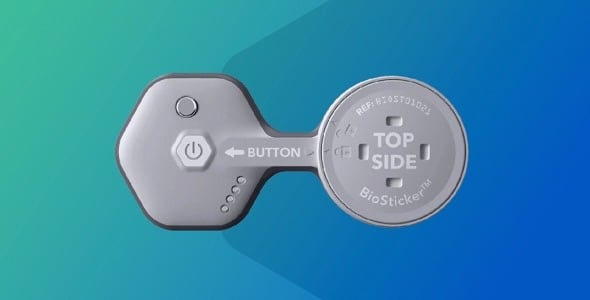
BioIntelliSense builds wearable medical-grade sensors that continuously monitor a hospital patient's vital signs and stream the data to a clinical-monitoring platform that flags early signs of patient deterioration. The hardware is two devices and a network. The BioButton is a coin-sized rechargeable wearable that sticks to a patient's upper torso and captures heart rate, respiratory rate, skin temperature, body position, activity level, and sleep continuously throughout an inpatient stay. The single-use BioSticker is a disposable adhesive form factor that covers up to 30 days of continuous monitoring, used for post-acute care and home-based remote patient monitoring programs. BioHub gateways (cellular and Wi-Fi) carry the patient data from the facility or home back to BioIntelliSense's cloud platform, where a clinical dashboard surfaces vital-sign trends and exception alerts to a hospital's central monitoring team.
Hospitals do not buy BioIntelliSense wearables outright as capital equipment. The model is hardware-as-a-service, which BioIntelliSense markets as Data-as-a-Service: a recurring fee covers the BioButton or BioSticker, the BioHub gateway, the dashboard and exception-management software, and the cloud analytics layer that turns raw vital-sign telemetry into deterioration alerts. The commercial path goes two ways. Direct enterprise sales reach individual hospital systems and post-acute networks, and a Medtronic distribution partnership gives Medtronic exclusive US distribution rights for hospital and hospital-to-home deployment of the BioButton. The pricing model is structured around patient-days monitored rather than hardware-unit count, which lines up with how hospitals already think about per-patient-per-day operational costs.
Blink Charging
- Founded: 2009
- Location: Bowie, Maryland
- Employees: ~450
- What they do: Electric vehicle charging hardware and cloud-based charging network software for commercial, fleet, and residential deployments
- Key customers: Sourcewell, West Yorkshire Combined Authority, Bradford Council, City of Richmond (California), NH Hotels & Resorts
- Website: blinkcharging.com
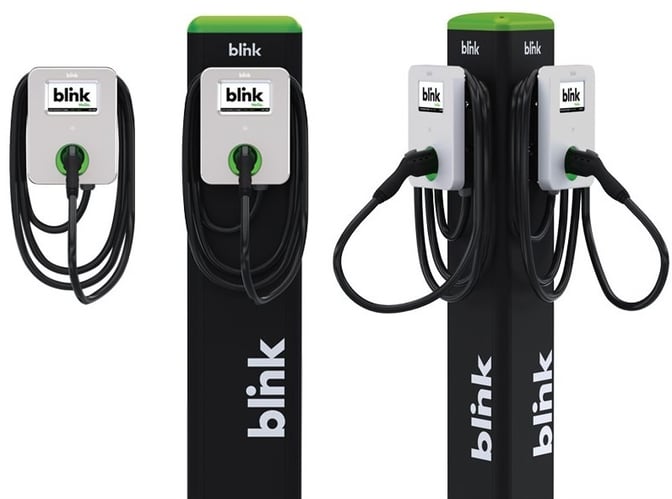
Blink Charging manufactures a wide range of EV charging hardware—including Level 2 chargers and DC fast chargers—designed for workplaces, retail sites, fleets, and public charging locations. These units support configurable power levels (which affect charging speed), multiple connector types, and network connectivity through Wi-Fi, Ethernet, or 4G LTE. Many models include credit-card readers, touchscreen displays, and OCPP-compliant communication for compatibility across charging networks. The Blink Network, the company’s cloud platform, enables remote monitoring, payment processing, driver authentication, and over-the-air software updates, along with features like usage analytics and real-time charge status through the Blink app. The system also supports basic energy-management functions, such as demand metering and demand-response capabilities to help sites align charging with grid conditions.
The company supports multiple business models, ranging from full equipment ownership to complete service-based deployments. In the Host Owned model, businesses purchase the chargers outright and pay a low monthly network fee for access to the Blink Network, keeping 100% of charging revenue. Host Owned Finance offers the same ownership and control but spreads hardware costs across 12-60 months as OpEx. In the Blink Owned Hybrid model, Blink owns the equipment and covers operations and administration while the host prepares the site, with charging revenue shared between both parties. The Blink Owned Turnkey option extends this further: Blink funds 100% of the project and operates the chargers while providing revenue share or lease payments to the host. These options give organizations a spectrum from CapEx ownership to fully managed hardware-as-a-Service, depending on traffic, budget, and operational needs.
Kinetic
- Founded: 2021
- Location: Orange County, California
- Employees: ~70
- What they do: AI-powered collision repair, calibration, and damage assessment for modern vehicles
- Customers: Collision repair centers, dealerships, fleets, glass repair providers
- Website: kinetic.auto
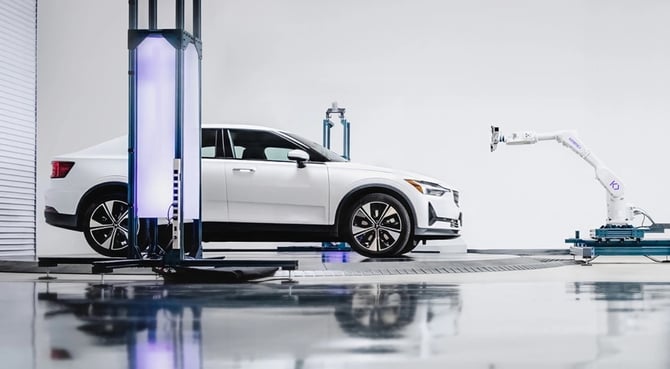
Kinetic builds automated hardware, software, and service infrastructure designed to repair the growing complexity of modern, Advanced Driver-Assistance Systems (ADAS)-enabled vehicles. Its offerings span Kinetic Vision, a hardware-based imaging system that creates high-resolution 3D digital twins to automate collision damage assessment and insurance-aligned estimates; Kinetic Hubs, purpose-built robotic facilities that perform calibrations, module programming, and scanning at scale; and Kinetic ID, an AI-powered calibration identification tool used by repair businesses to identify safety and sensor repair requirements. Together, these systems reduce repair cycle times from hours or days to minutes, increase throughput, and bring speed and precision to digital collision repair across all vehicle makes and models.
Kinetic Hubs are explicitly offered as zero-CapEx, provider-owned facilities, with Kinetic retaining ownership of the robotics and automation while customers access calibration and repair services through a revenue-share model. Kinetic Vision complements this approach by pairing installed imaging hardware with ongoing software, maintenance, and remote estimating services, making it a managed system rather than a one-time equipment purchase. Rather than monetizing through traditional hardware sales or pay-per-use charging, Kinetic aligns revenue with repair volume, operational efficiency, and outcomes delivered to collision centers and their insurance partners.