

Share
by Zachary Kimball on July 20, 2026
Hardware-as-a-service (HaaS) is gaining momentum across a variety of industries. Many of the early adopters of HaaS are in robotics, offering robots-as-a-service (RaaS) to decrease barriers to entry and improve overall value to customers. Others offer machine-as-a-service (MaaS), device-as-a-service (DaaS), or equipment-as-a-service (EaaS).
Some companies pitch outcomes more than assets, offering data-as-a-service or platform-as-a-service models. From network-as-a-service to facades cleaning; managed service providers (MSPs) to managed security service providers (MSSPs); and autonomous construction equipment to diagnostic sensors and 3D printers, these companies are on the cutting-edge of their fields.
This post is part of a series about modern hardware companies, their business models, and the future of HaaS. For more, see posts from early and late March, early and late April, early and late May, and early and late June.
Manitowoc
- Founded: 1902
- Location: Milwaukee, Wisconsin
- Employees: ~2,400
- What they do: Crane manufacturing, lifting solutions, and digital service technologies
- Key customers: Bechtel, Mammoet, Maxim Crane Works, Sarens
- Website: manitowoc.com
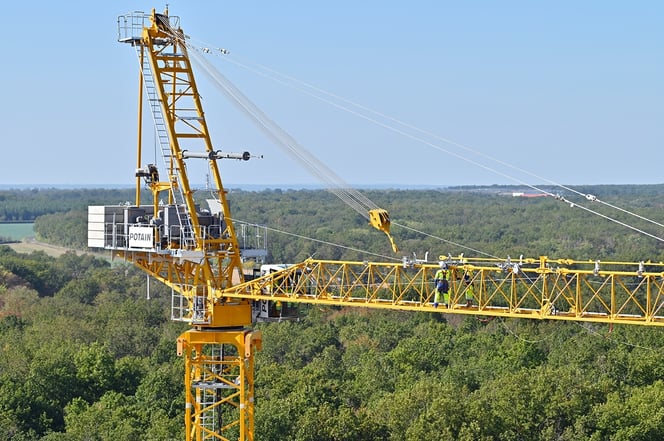
Manitowoc designs and manufactures mobile, tower, and crawler cranes used across construction, energy, and infrastructure projects worldwide. The company’s product lineup includes Grove, Potain, and National Crane brands, known for their reliability, precision, and increasingly, their digital connectivity. Modern models are equipped with telematics and remote diagnostics that link to the company’s ASSIST mobile app and Potain CONNECT and Grove CONNECT cloud platforms—tools that provide real-time error codes, performance insights, and maintenance guidance. Manitowoc has also introduced fully electrified cranes and connected accessories that improve sustainability, efficiency, and total cost of ownership for operators.
The company’s business model is hybrid, combining traditional equipment sales with expanding recurring revenue from aftermarket parts, maintenance, rentals, refurbished cranes, and digital service programs. Customers typically purchase cranes as capital assets but maintain long-term relationships through Manitowoc’s service and remanufacturing programs. The company’s EnCORE initiative refurbishes cranes to OEM standards and includes certified warranties, while rental and “Certified Used” sales create continuous revenue across the product lifecycle. With over 100 service locations and growing technician capacity, Manitowoc grew aftermarket revenue from $376 million in 2020 to $629 million in 2024, reflecting a deliberate shift toward higher-margin, service-driven growth.
“We’ve really shifted from being a manufacturing company to being much more focused on the services we provide,” says CEO Aaron Ravenscroft. “We’ve transitioned to a more aftermarket-focused model. Our day-to-day focus is on how we continuously drive more value for our customers in the field—not just by selling them new machines.”
Eagle Eye Networks
- Founded: 2012
- Location: Austin, Texas
- Employees: ~700
- What they do: Cloud-managed video surveillance platform with AI-powered analytics and integrations across multi-vendor camera systems
- Key customers: Ronald McDonald House Charities, Domino’s Pizza, Planet Fitness, KFC
- Website: een.com
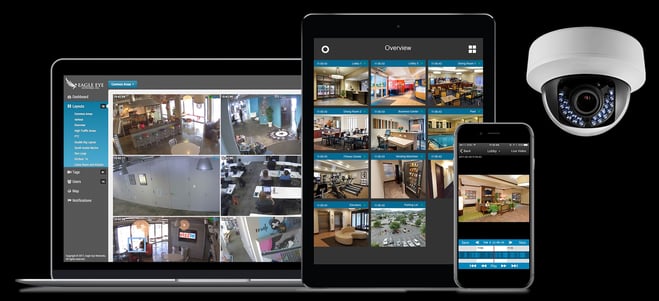
Eagle Eye Networks develops secure, cloud-ready cameras and recording hardware that bring video surveillance into the cloud era. Its portfolio spans plug-and-play dome, bullet, and turret cameras up to 8 megapixels, designed for seamless connectivity with the Eagle Eye Cloud or more than 4,000 supported third-party models. Alongside its bridges and CMVRs, these devices form the foundation of a camera-agnostic, AI-enabled video platform. At the core is the Eagle Eye Cloud VMS, which delivers centralized video management, remote monitoring, and advanced analytics such as license-plate recognition, gun detection, and occupancy insights. Customers can stream and store footage securely in the cloud, monitor sites in real time, and integrate video data with enterprise systems for safety, compliance, and operational visibility.
The company operates a hybrid CapEx + subscription model. Customers either purchase new cameras or connect existing ones to the Eagle Eye Cloud through on-premise bridge devices, creating flexibility for mixed hardware environments. The ongoing value comes from the subscription-based VMS, which includes cloud storage, AI analytics, and continuous updates. For customers seeking an OpEx-based alternative, Eagle Eye also offers Eagle Eye Complete, bundling hardware, software, and support into a single recurring plan to minimize upfront costs and simplify lifecycle management.
NEURA Robotics
- Founded: 2019
- Location: Metzingen, Germany
- Employees: ~370
- What they do: Cognitive robots that combine advanced AI, sensing, and mechatronics for industrial and household applications
- Key customers: Kawasaki, Omron, Vorwerk, HD Hyundai Samho
- Website: neura-robotics.com
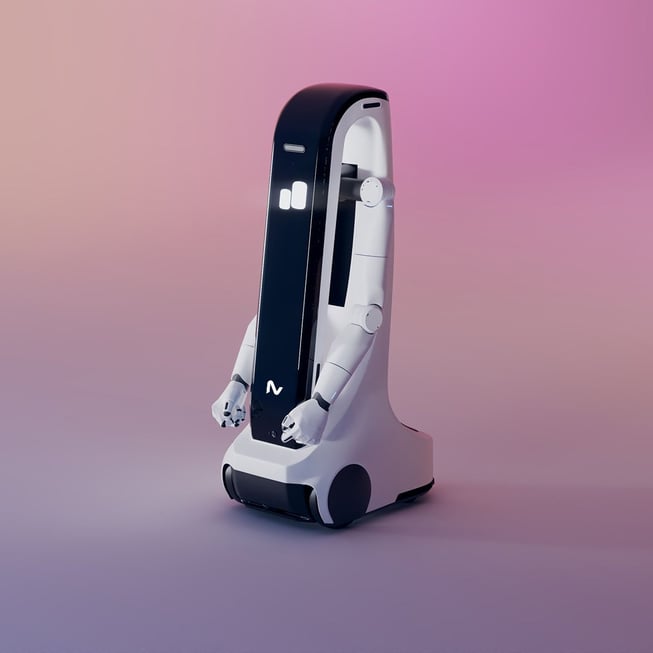
NEURA Robotics builds cognitive robots designed to work safely and intelligently alongside humans. Its lineup includes MAiRA, an industrial collaborative robot that can handle precise assembly, inspection, and material-handling tasks; 4NE1, a humanoid assistant capable of customer interaction and adaptive movement; and MiPA, a consumer-oriented household robot designed to recognize faces, respond to voice commands, and assist with daily routines. Each system combines high-performance sensors, vision, and force feedback with NEURA’s cloud-connected Neuraverse platform, enabling perception, reasoning, and autonomous decision-making. The result is a family of robots that can learn continuously, communicate across devices, and adapt to new tasks over time, blending industrial precision with human-aware intelligence.
The company’s business model is hybrid, combining upfront hardware sales with recurring revenue from software, AI, and cloud services. Robots such as MiPA are sold directly to customers at fixed prices, while the Neuraverse platform—the ecosystem that connects, trains, and updates NEURA’s robots—is monetized through subscription or usage-based agreements. This model allows the company to capture one-time revenue from hardware while maintaining long-term relationships through software updates, cognitive upgrades, and data integration. NEURA also licenses its AI and software stack to third-party robotics manufacturers, extending its reach beyond its own product line.
Throne Labs
- Founded: 2020
- Location: Washington, D.C.
- Employees: ~35
- What they do: Prefabricated, sensor-enabled public restrooms
- Key customers: City of Ann Arbor, City of Long Beach, Caltrain, AC Transit, LA Metro
- Website: thronelabs.co
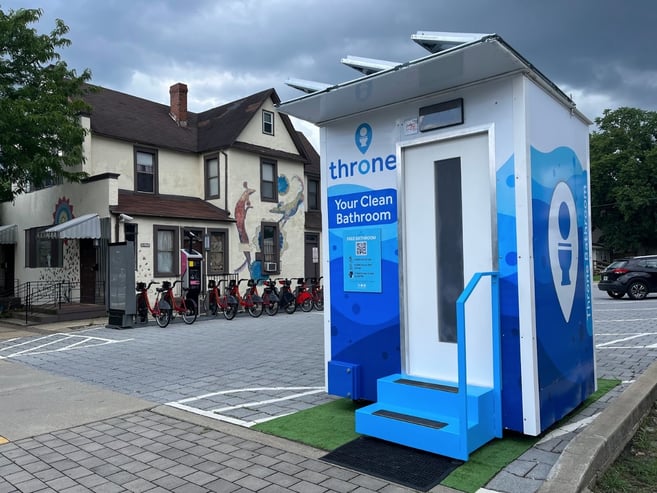
Throne Labs builds smart, self-contained public restrooms designed to solve the chronic shortage of clean, safe facilities in urban spaces. Each unit is prefabricated and off-grid capable, with flush toilets, sinks, ventilation, and solar or self-contained water and waste systems. More than 20 onboard sensors track usage, cleanliness, air quality, and water levels, while digital access (via QR code, app, or tap card) helps operators manage who uses the facilities. By blending hardware and software, Throne creates a public utility that’s both physically robust and digitally managed.
The company’s model is service-oriented rather than transactional. Cities and agencies typically deploy Thrones under multi-year agreements that include installation, real-time monitoring, and cleaning/maintenance handled directly by Throne’s teams. For municipalities, this means no upfront capital expense and a “hands-off” operational burden, while Throne generates recurring revenue from ongoing service and data-driven fleet management. This structure follows the principles of Hardware-as-a-Service: recurring contracts, bundled services, and remote monitoring.
Mashgin
- Founded: 2014
- Location: Palo Alto, California
- Employees: ~120
- What they do: AI-powered self-checkout kiosks for retail, foodservice, stadiums, and high-traffic venues
- Key customers: Aramark, Circle K, Shell, BP, Sodexo, Compass Group, San Francisco Giants, Palisades Tahoe
- Website: mashgin.com
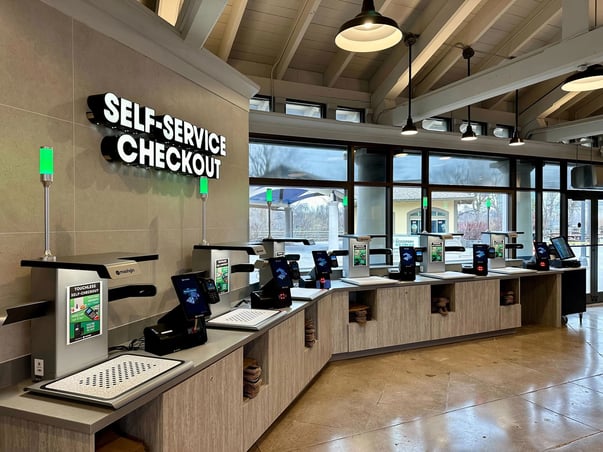
Mashgin offers a purpose-built hardware + software system for autonomous self-checkout. Its kiosks use multiple 3D cameras, deep learning, and computer vision to identify items without barcodes, enabling customers to complete checkout in roughly five seconds with remarkable consistency. The hardware is proprietary and designed for rapid deployment, integrating directly with existing POS, payment, and loyalty systems in diverse environments. Operators can add new or custom items in under a minute, and Mashgin provides U.S.-based 24/7 customer support to keep systems online and reliable across busy retail and foodservice operations.
The company uses a hybrid CapEx + subscription model. Retailers and venues purchase the kiosk hardware upfront, creating a capital expenditure that fits within traditional equipment budgets. Mashgin then charges a recurring monthly fee—approximately $1,000 per machine per month—for software updates, cloud services, integrations, analytics, and ongoing support that power the AI engine. This structure lets customers own the hardware while paying for the continuously improving recognition models, managed services, and operational insights that make the system effective at scale.