

Share
by Zachary Kimball on November 3, 2026
Hardware-as-a-service (HaaS) is gaining momentum across a variety of industries. Many of the early adopters of HaaS are in robotics, offering robots-as-a-service (RaaS) to decrease barriers to entry and improve overall value to customers. Others offer machine-as-a-service (MaaS), device-as-a-service (DaaS), or equipment-as-a-service (EaaS).
Some companies pitch outcomes more than assets, offering data-as-a-service or platform-as-a-service models. From network-as-a-service to facades cleaning; managed service providers (MSPs) to managed security service providers (MSSPs); and autonomous construction equipment to diagnostic sensors and 3D printers, these companies are on the cutting-edge of their fields.
This post is part of a series about modern hardware companies, their business models, and the future of HaaS. For more, see posts from early and late July, early and late August, early and late September, and early October.
Liebherr
- Founded: 1949
- Location: Newport News, Virginia (global HQ in Bulle, Switzerland)
- Employees: 50,000+
- What they do: Heavy equipment, automation systems, and intelligent software for manufacturing, construction, mining, and aerospace applications
- Key customers: Airbus, Boeing, Embraer
- Website: liebherr.com
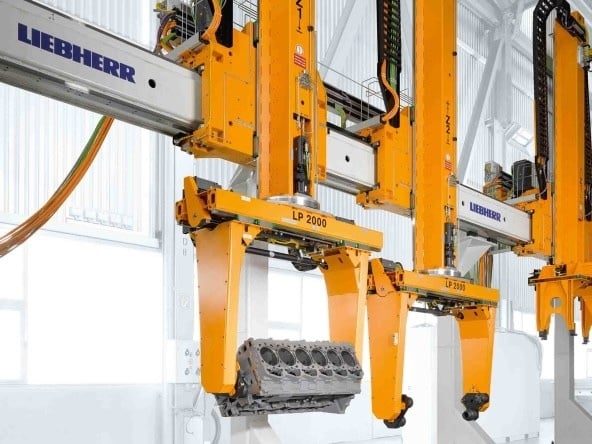
Liebherr develops one of the world's most comprehensive portfolios of industrial and automation technology, spanning sectors from construction and mining to aerospace, refrigeration, and precision manufacturing. In its automation and manufacturing divisions, the company builds linear gantry loaders, pallet-handling and tool-handling systems, and flexible robot cells for gear production and machine tending. Its software platforms, including the LHWebPlatform, LHRobotics.Vision, and Intelligent Cell Control, provide real-time production monitoring, part tracking, and tool lifecycle management. Together, these systems allow manufacturers to automate setup, assembly, and material flow while maintaining flexibility for small-batch or custom production.
Liebherr's business model is hybrid, combining hardware sales with modular software and digital services that extend machine value over time. Customers typically purchase equipment outright but layer on digital platforms and service agreements covering predictive maintenance, remote monitoring, and software updates. The company’s LHWebPlatform is delivered as a modular suite, with configurable apps that can be licensed or subscribed to depending on operational scope. LiDAT telematics system adds another layer, transmitting real-time data on machine performance, fuel usage, and maintenance needs to optimize uptime and fleet efficiency. Across its heavy equipment lines, Liebherr also offers financing, leasing, and rental options, along with tiered service agreements that bundle telemetry, condition monitoring, and maintenance support into recurring contracts. This approach balances traditional equipment ownership with subscription-based access to data and digital capabilities.
“The focus is no longer just on the technological excellence of devices and machines,” says Stephen Albrecht, Managing Director at Liebherr-International AG. “Today, we focus much more on the entire value chain for customers and users of Liebherr solutions. It’s all about concrete, measurable added value that comes from digitalization.”
Wiliot
- Founded: 2017
- Location: San Diego, California (global HQ in Caesarea, Israel)
- Employees: ~260
- What they do: Battery-free Bluetooth tags (“IoT Pixels”) and a cloud platform that turns everyday products into connected, data-rich assets
- Key customers: Walmart, AWS, Google Cloud, Boar’s Head, Mondelez International
- Website: wiliot.com
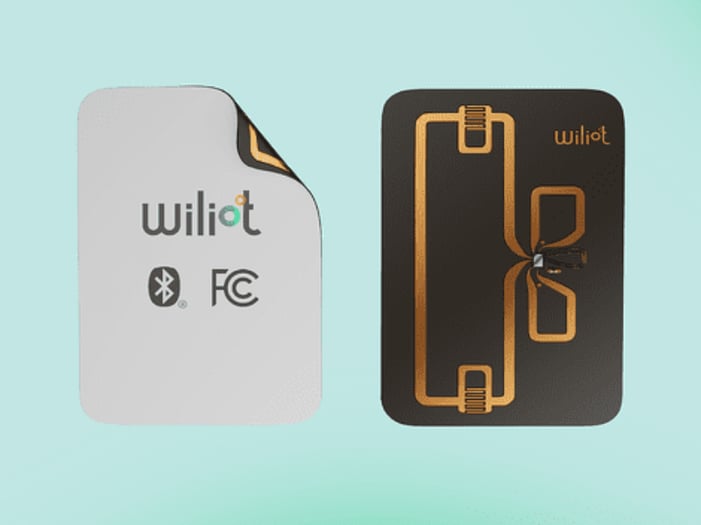
Wiliot transforms everyday products into smart, data-generating assets through its ultra-low-power “IoT Pixels.” These postage-stamp-sized, battery-free tags harvest energy from ambient radio waves and attach to containers, packaging, or individual items. Once activated, they continuously capture environmental and motion data—temperature, humidity, fill level, location—and send it via Bluetooth to nearby hubs. The data is aggregated in the Wiliot Cloud, where AI and analytics models turn raw signals into supply-chain intelligence, offering customers real-time visibility across manufacturing, logistics, and retail operations.
The company’s hybrid business model pairs CapEx hardware with a subscription SaaS layer. IoT Pixels are produced and sold through licensed manufacturing partners, allowing hardware costs to remain low and deployment to scale broadly. Customers then subscribe to Wiliot’s cloud platform, which processes incoming sensor data, powers dashboards and APIs, and enables integrations with third-party applications. This structure gives customers a lightweight path to continuous, software-driven value after the initial hardware deployment, transforming physical inventory into a recurring source of digital insight.
XYZ Robotics
- Founded: 2018
- Location: Allston, Massachusetts (global HQ in Shanghai, China)
- Employees: ~200
- What they do: Intelligent warehouse and logistics automation
- Customers: Sanwa Supply, China Tobacco, Eurovo, Marubeni Logistics
- Website: xyzrobotics.com
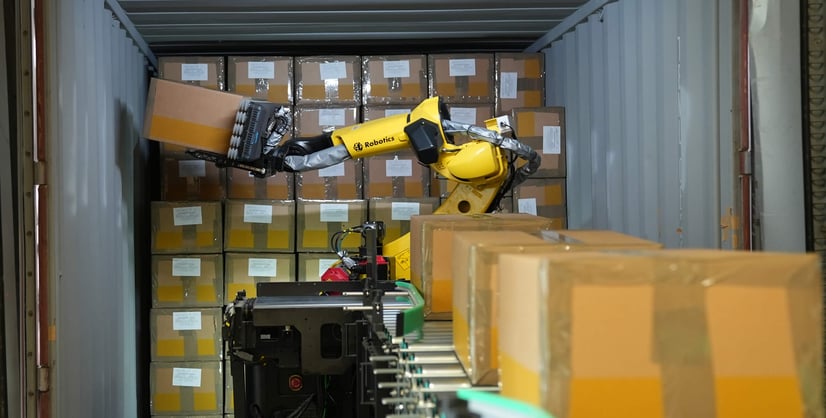
XYZ Robotics develops advanced robotic automation systems for logistics and distribution, integrating AI-powered perception, manipulation, and mobility into a single full-stack platform. Its Rocky series—RockyOne and RockyLight—are mobile manipulation robots (MMRs) that automate truck loading, mixed-case palletizing, and order picking with near-human flexibility. Each unit combines high-speed barcode scanning, 3D vision, and adaptive grippers to identify, pick, and handle thousands of SKUs with precision. Through seamless integration with AGVs and warehouse management systems, XYZ’s solutions optimize inbound and outbound operations, increasing throughput and reducing manual labor in high-velocity environments.
The company’s commercial model blends Hardware-as-a-Service (HaaS) and hybrid HaaS structures. Large-scale deployments are typically sold through CapEx-plus-subscription bundles, while smaller or fast-scaling customers can access robots via full subscription plans. These contracts include hardware access, AI and vision software, maintenance, analytics, and continuous performance upgrades—effectively delivering “automation-as-a-service.” This approach enables customers to scale robotics without heavy upfront investment while ensuring XYZ maintains recurring revenue through its software and service layers.
Deep Sentinel
- Founded: 2016
- Location: Pleasanton, California
- Employees: ~100
- What they do: AI-powered live video surveillance combining smart cameras, real-time analytics, and human guard intervention
- Key customers: Residential and small-to-medium business owners seeking proactive, monitored perimeter security
- Website: deepsentinel.com
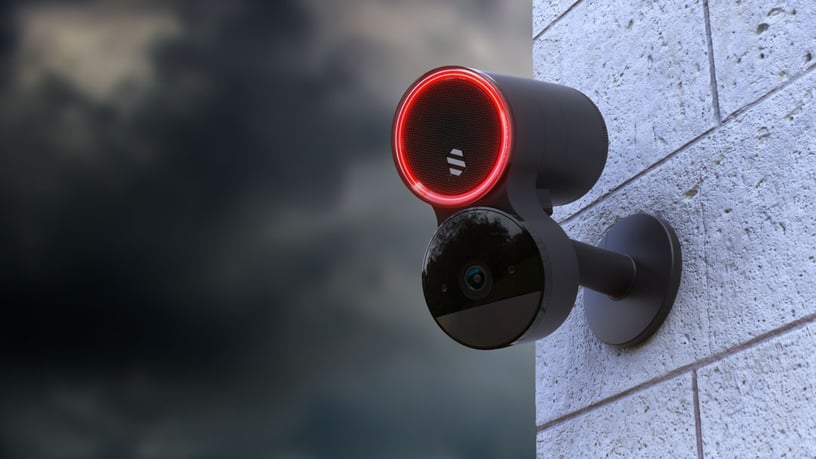
Deep Sentinel delivers real-time, human-verified protection through AI-enabled security hardware. The company’s camera kits include smart hubs, wireless or PoE cameras, and on-device AI designed to detect and classify motion before it becomes a threat. When suspicious activity is detected, the system streams the event to LiveSentinel guards, who can intervene instantly via two-way audio and contact law enforcement if needed. The result is a proactive security layer that bridges the gap between do-it-yourself home systems and enterprise-grade surveillance, offering customers the assurance of live, human-backed monitoring powered by machine learning.
The company operates a hybrid CapEx + OpEx business model. Customers make a one-time purchase of Deep Sentinel’s security hardware, then subscribe to ongoing monitoring and analytics services. Subscription fees fund the company’s AI-driven video processing and professional guard network, ensuring continuous improvement in threat detection and response accuracy. This combination of owned hardware and recurring intelligence aligns incentives around long-term reliability, offering predictable costs for customers and scalable recurring revenue for the company.
Brickeye
- Founded: 2014
- Location: Toronto, Ontario, Canada
- Employees: ~35
- What they do: Construction-site risk mitigation through IoT-enabled hardware, job-site connectivity, and real-time cloud analytics
- Key customers: Walsh Group, Mill Creek Residential, Lane Construction, EllisDon, Mattamy Homes
- Website: brickeye.com
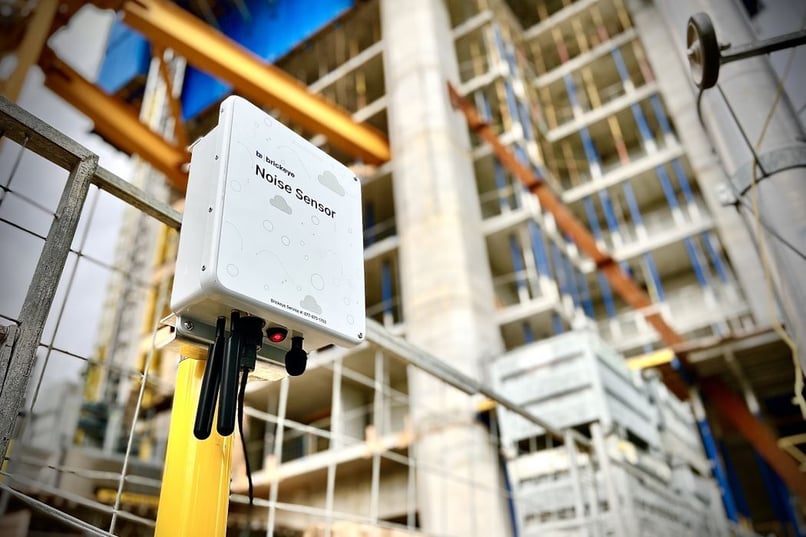
Brickeye provides an end-to-end construction risk and productivity platform that integrates ruggedized IoT hardware, standalone job-site connectivity, and cloud software purpose-built for harsh construction environments. Its hardware suite includes sensors for water flow and leak detection, concrete maturity and strength monitoring, and environmental conditions such as noise, temperature, humidity, dust, and air quality. These devices deliver continuous, real-time data designed to reduce rework, prevent water damage, and surface early warnings for environmental or structural issues. Brickeye’s cloud platform aggregates sensor data into live dashboards and historical logs, sends actionable alerts, enables automated controls, and supports remote visibility via mobile and desktop. The company also offers BuildersRiskIQ, a dashboard for insureds, brokers, and underwriters that visualizes IoT-enabled risk controls and helps lower deductibles and improve Builders Risk insurance terms.
Brickeye operates a full hardware-as-a-service (HaaS) model, offering its solution through subscription contracts that bundle devices, installation, connectivity, software access, and 24/7 ongoing service. Customers subscribe to protection services on a project-by-project basis, with pricing tied to service duration and the types of risk mitigation deployed. The subscription covers hardware provisioning and maintenance, cloud monitoring, automated alerts, analytics, onboarding, setup and configuration, and dedicated project management. By delivering the entire solution as a turnkey subscription—rather than as standalone CapEx sensors—Brickeye ensures that customers have continuous coverage, always-on connectivity, and up-to-date IoT risk controls throughout the life of each construction project.