

Share
by Zachary Kimball on November 18, 2026
Hardware-as-a-service (HaaS) is gaining momentum across a variety of industries. Many of the early adopters of HaaS are in robotics, offering robots-as-a-service (RaaS) to decrease barriers to entry and improve overall value to customers. Others offer machine-as-a-service (MaaS), device-as-a-service (DaaS), or equipment-as-a-service (EaaS).
Some companies pitch outcomes more than assets, offering data-as-a-service or platform-as-a-service models. From network-as-a-service to facades cleaning; managed service providers (MSPs) to managed security service providers (MSSPs); and autonomous construction equipment to diagnostic sensors and 3D printers, these companies are on the cutting-edge of their fields.
This post is part of a series about modern hardware companies, their business models, and the future of HaaS. For more, see posts from early and late July, early and late August, early and late September, and early and late October.
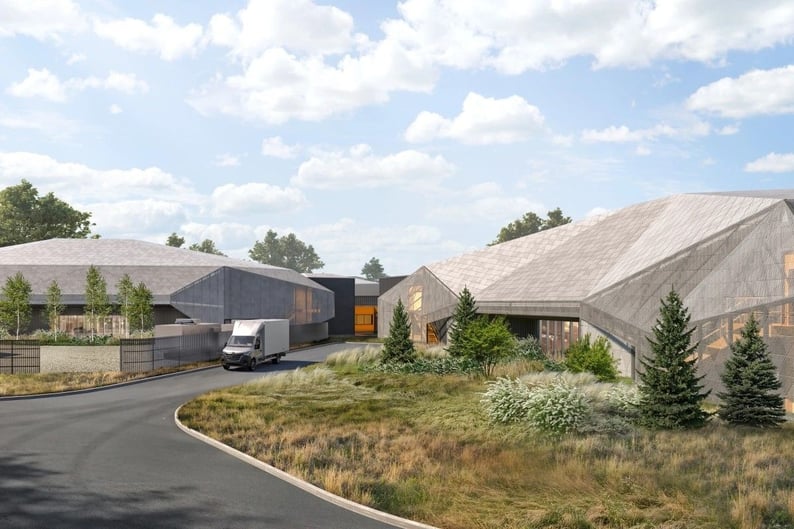
CubeFabs
- Founded: 2010
- Location: Brooklyn, New York
- Employees: ~10
- What they do: Modular AI-operated semiconductor manufacturing plants
- Key customers: Hologic, Broadcom, Coherent, Standard BioTools
- Website: cubefabs.com
CubeFabs operates a hybrid hardware-as-a-service model structured as a franchise. A customer buys a CubeFab outright for a minimum of $30 to $40 million (a fraction of the multi-billion-dollar cost of a traditional chip fab) and gets balance-sheet ownership of the facility. CubeFabs orchestrates the supply chain, prefabricates the modular pieces, and installs the plant according to the customer's specific manufacturing needs. After installation, CubeFabs provides service and monitoring and bundles the nControl AI platform under an ongoing license. The structure keeps CubeFabs in a recurring relationship that grows alongside the customer's production; and it gives universities, mid-sized manufacturers, and regional governments a path to onsite chip production that has historically been available only to a handful of multibillion-dollar incumbents.
"These fabs do not require billions in capital expenditure or large populations of highly trained workers," explains Matthew Putman, CubeFabs’ Founder and CEO. "The vision is that any region—whether in the Global South or the United States—should be able to produce what it needs locally."
Turf Tank
- Founded: 2015
- Location: Marietta, Georgia (global HQ: Svenstrup, Denmark)
- Employees: ~200
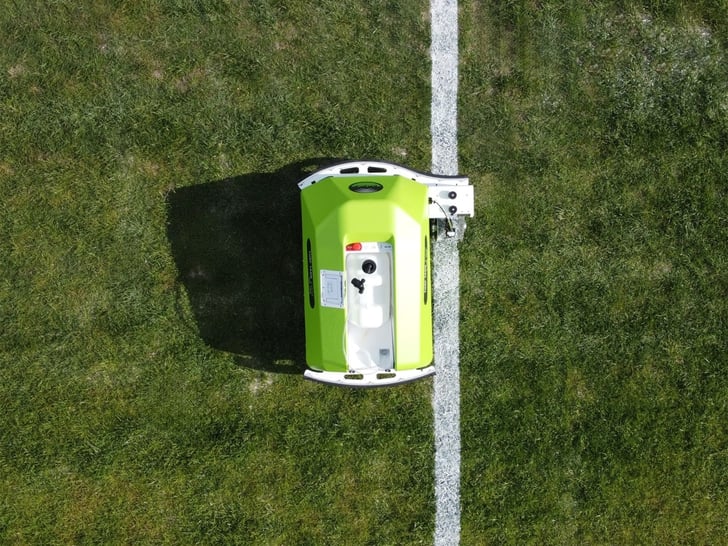
- What they do: Autonomous line-marking robots for athletic fields
- Key customers: Columbus Crew, Jewel M. Sumner High School, Rio Pinar Golf Club, Chattanooga Parks and Outdoors, Kershaw County Parks & Recreation
- Website: turftank.com
Turf Tank paints athletic field lines with autonomous, GPS-guided robots that an operator places at a corner of the field, programs from a tablet, and walks away from. The robot navigates the perimeter, lays the layout the operator chose from more than 120 templates, and overpaints stored line positions on subsequent visits without manual measurement. The current flagship Turf Tank Two ships with an adjustable sprayer module, 5.5-gallon paint capacity, fast battery swap, and a tablet interface featuring a drag-and-drop layout editor, individual line control, paint estimation, and offline operation for fields with poor connectivity. The original Turf Tank One remains in the lineup for the standard robot tier, and Turf Tank Lite is a compact, 2.5-gallon entry model for organizations managing one or two sports. All three machines work across natural grass, artificial turf, dirt, and asphalt, and ship with the same tablet-controlled software stack and onboarded layout library.
Turf Tank packages the robot, GPS base station, tablet software, ongoing software updates, on-site training, and 24/7 support into a single annual subscription, structured in tiers that scale with the customer's number of sports. The model is hardware-as-a-service: rather than buying the robot, the customer pays an annual fee that keeps the entire package current and serviced. Turf Tank implemented the subscription to remove the large upfront cost that had limited adoption among smaller groundskeeping operations, opening the install base to high schools, parks departments, and single-club facilities that wouldn't have approved a capital purchase. Recurring revenue scales with field complexity rather than fleet count; an organization adding sports moves up the tier ladder rather than buying a second robot.
Evertz
- Founded: 1966
- Location: Burlington, Ontario, Canada
- Employees: ~1,400
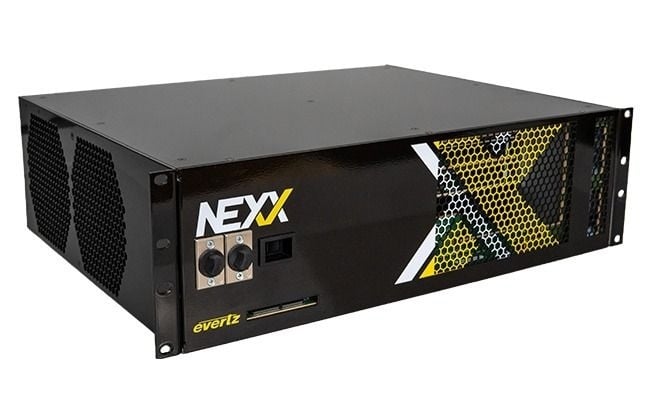
- What they do: Broadcast and media infrastructure equipment platform
- Key customers: Cleveland Cavaliers, Jupiler Pro League, Pitt Studios
- Website: evertz.com
Evertz builds the equipment that moves video and audio inside a broadcast facility: the racks of hardware that take feeds from cameras, microphones, and incoming broadcasts, route them to the right place, convert formats, mix in graphics, and send the finished signal out to viewers. The flagship NEXX platform is a giant signal-routing switchboard that can connect 960 incoming video feeds to 960 outgoing destinations simultaneously, at the bandwidth needed for ultra-high-definition broadcast. NEXX bridges the older cable-based broadcast technology and the newer internet-based approach, so a broadcaster can modernize without rebuilding their facility. The DreamCatcher production suite handles instant replay, multi-camera live production, and remote production for sports and entertainment; the BRAVO module lets a single team run several simultaneous live shows from one control room. Above the hardware sits a software stack for orchestrating signals, monitoring health, managing networks, and handling cloud-based broadcast workflows.
Evertz sells the broadcast equipment as capital infrastructure. Customers buy the signal-routing chassis, the production hardware, and the rest of the rack equipment up front, then pay recurring fees for the software layer. This is a hardware-as-a-service hybrid. As broadcasters migrate from older cable-based workflows to newer internet-based ones, the recurring software layer carries them across the transition without requiring a hardware swap.
Noraxon
- Founded: 1990
- Location: Scottsdale, Arizona
- Employees: ~25
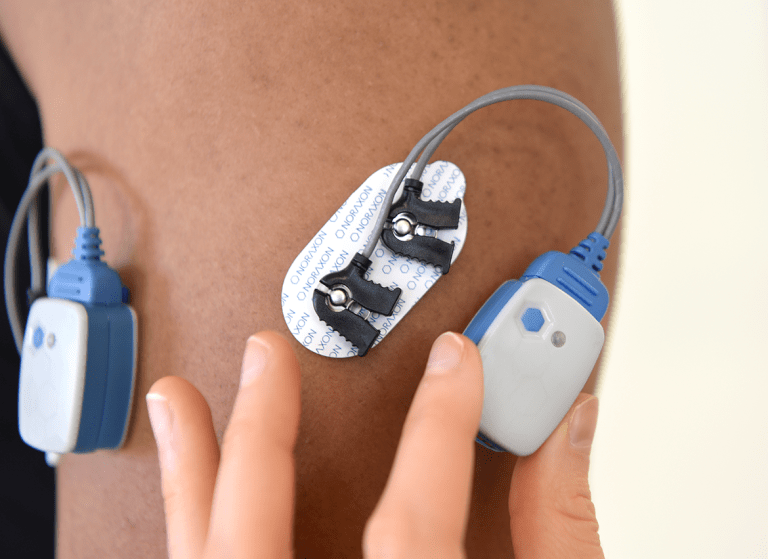
- What they do: Human movement measurement and analysis hardware
- Customers: Biomechanics research labs, sports performance clinics, rehabilitation facilities, and ergonomics consultancies
- Website: noraxon.com
Noraxon makes the sensors, force plates, treadmills, and software that researchers and clinicians use to measure how a human body moves. The hardware line covers the major ways to capture movement data: Ultium EMG sensors stick to the skin above a muscle and record its electrical activity wirelessly, showing whether the right muscles are firing at the right time during a movement; Ultium Motion sensors strap to the body and track three-dimensional joint angles and accelerations using inertial measurement; and Core EMG offers a direct-connect version of the same muscle measurement for quicker assessments. Force plates embedded in the floor measure how hard and in what direction a person pushes off during a jump or step, pressure-sensing insoles and platforms map the distribution of force across the foot, and the Gaitway 3D treadmill combines three-axis force measurement with pressure mapping on a single walking belt so a clinician can study a patient's gait without needing a long runway. Everything feeds into myoRESEARCH, Noraxon's software platform: it automatically synchronizes data from every connected device and produces reports the clinician or researcher can use immediately.
Noraxon operates as a hybrid hardware-as-a-service business that bundles the hardware with licensed software. A university lab or clinic buys the hardware systems outright and receives a per-seat myoRESEARCH license that activates the software on a limited number of workstations. From there, Noraxon maintains several recurring revenue lines. Software updates that add new measurement modules and integrations ship multiple times a year and extend the useful life of installed hardware; electrodes, sensor tape, SmartLeads, straps, and other consumables are sold through an online store and need regular replenishment; and paid services like sensor calibration, battery replacement, and on-site training keep the hardware performing to specification.
Invert Robotics
- Founded: 2011
- Location: Dublin, Ireland
- Employees: ~25
- What they do: Climbing robotic non-destructive inspection crawlers
- Key customers: Heineken, Danone, Lactalis, Milei, DMK
- Website: invertrobotics.com
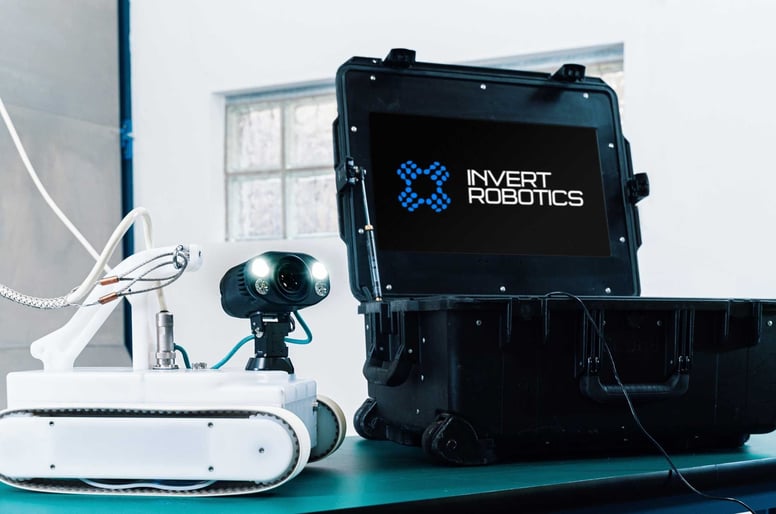
Invert Robotics builds climbing crawler robots that scale the inside walls of industrial tanks, vessels, spray dryers, and aircraft fuselages to perform non-destructive testing without sending humans into confined or hazardous spaces. The V1200 and V1800 use a patented vacuum-adhesion suction-cup system to grip non-magnetic surfaces such as stainless steel, aluminum, plastic, and glass, while the M1000 climbs ferromagnetic coated and carbon-steel assets. Each crawler carries up to five kilograms of NDT tooling on its back, swappable to suit the inspection task: high-definition cameras with 30x optical zoom for visual defect mapping, ultrasonic probes for wall-thickness measurement, and surface-wave sensors for sub-surface flaw detection. The robots can resolve defects as fine as 65 microns. Inspection results feed into a data services layer that produces a full report within three working days, with repeatable scans that let asset managers track defect progression across successive inspections.
The commercial model runs on three separate paths. Most of the revenue base sits in robots-as-a-service, where Invert technicians arrive on site with a robot, perform the inspection at the customer's tank or vessel, and deliver a written defect report within three working days. Customers who prefer to run inspections themselves rent a robot for a specific project, with Invert training their inspectors and providing periodic refresher courses, or sign a longer-term lease that adapts the robot to the customer's asset profile and bundles hardware and software upgrades for the term of the contract. A product-sales division also sells robots outright. The recurring base sits in the rental, lease, training, and inspection-services layers.